

5·
17 hours agoThey’re guard dogs
They’re guard dogs

Dual wielding isn’t really over powered right now, most of the gear and weapons are pretty viable options. The flying bug is there but you can see it and hear it so you kind of know when you’ve been spotted. Give it another try!
Hunt Showdown 🤠

I don’t think that peasant economy was exploitative in the same way capitalism is. Peasants were largely farmers who grew food and provided the landowner with a percentage of their crop. They were integral to human survival and as far as I know the percentage taken by landowners was not comparable to the wealth extracted from workers today.
Alien diarrhea is the real cause of global warning!

Don’t search for the secret explosive that mythbusters discovered

What is blue but doesn’t weigh very much? Light blue

I heard that Biden can assassinate Trump and he might not need to pardon himself.

I hope his butthole gets destroyed
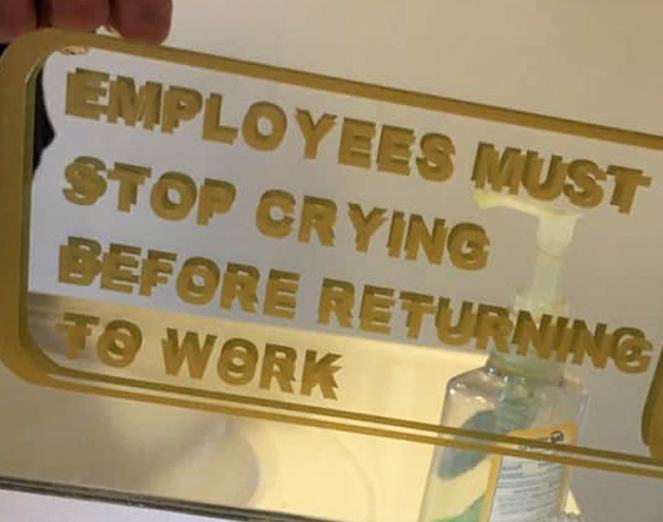
“brands” by writing a number on the forehead with a pen

Food in plastic containers seems really bad for you, and microwaving food in plastic seems worse.
I might have assumed people’s interpretation but a lot of people seem to think that all Samaritans are perceived as good and a good Samaritan is one of them. For example in this cartoon they just use the phrase Samaritan when they mean a good person.
Also I don’t see the distinction between “the Samaritans are enemies of the Jews but this one helps” and “the others (Samaritans) are bad but this one is okay”
Fun fact, in history the Samaritans were widely disliked. The term Good Samaritan actually means “All of the others are bad but this one is okay”
“The second he was in front of me, he pulled me into him, and his hands were just on me and didn’t come off,” Williams said. “And then the hands started moving, and they were on the, you know, on the side of my breasts, on my hips, back down to my butt, back up, sort of then, you know – they were just on me the whole time. And I froze. I couldn’t understand what was going on.”
Williams said that Epstein and Trump continued talking while Trump’s hands were on her, “looking at each other and smiling.”
I thought it said expulsion of Russian Mountaineers so that was pretty confusing
After the Charlottesville protests and the guy ran everyone down with his car, I went to /b and it was flooded with messages telling everyone to attack more people with cars
Third party campaigning is BS. All campaigning should be done by the candidate and all donations should go through their campaign. All donors should be public or the list should be available to the government for auditing. Companies aren’t people, they don’t have rights from the Constitution, they shouldn’t be allowed to campaign or contribute.
Everybody knows wrestling is real and doesn’t have writers
“With the latest settlements, the number of people alleging abuse now stands at nearly 2,500”
So every Catholic church in major cities has thousands of sexual abuse victims? Did they just move the priests around and let them teach the other priests how to molest kids? How many centuries has the Catholic Church been molesting kids for?















Lack of sunshine, rainy cold weather