


Dr. Sanjeev Balakrishnan holds a Master of Medicine in Family Medicine from the National University of Singapore and is currently a GP working in Perth, Western Australia. Dr. Balakrishnan has more than two decades of experience and is very passionate about the management of obesity, type 2 diabetes and metabolic syndrome through healthy eating. He is an advocate for the low carbohydrate-high healthy fat diet and is the creator of Low Carb WA. He is a fully credentialed Family Physician in Singapore and is a Fellow of the Royal Australian College of General Practitioners.
A review of different mental health models over time, and the possible impact of nutrition, as well as discussions of areas of exciting possible research.
summerizer
Dr. Sanjeev Balakrishnan - ‘Nutrition For Mental Health’
Dr. Sanjeev Balakrishnan discusses the strong connection between mental and metabolic health, advocating for a low-carb ketogenic diet as a potential adjunct treatment for mental health disorders. He emphasizes the limitations of medication-focused treatments and the importance of diet in managing conditions like depression and anxiety. The talk outlines how metabolic health impacts brain function and highlights evidence suggesting dietary interventions can significantly improve mental health outcomes.
Key Points
Connection between mental and metabolic health
Dr. Balakrishnan introduces the critical relationship between mental health and metabolic health, arguing that both should be treated as interconnected rather than separate issues. He suggests that improving metabolic health may directly enhance mental well-being.
Limitations of medication for mental health
He critiques the common reliance on medications like SSRIs for treating mental disorders, noting their side effects and questioning their effectiveness in addressing the underlying causes of mental health issues.
Brain energy model
The speaker presents the brain energy model, which posits that mental health disorders may stem from disruptions in brain metabolism and energy supply, highlighting the role of mitochondria in neuron function.
Role of diet in mental health
Dr. Balakrishnan advocates for low-carb and ketogenic diets as effective options for improving mental health, noting that such diets can help stabilize blood sugar and promote ketosis, which may enhance brain function.
Evidence supporting ketogenic diets
He reviews various studies demonstrating how ketogenic diets have led to improvements in psychiatric symptoms in individuals with depression and anxiety, suggesting these diets may promote metabolic health in parallel.
Cautions for dietary changes
Dr. Balakrishnan stresses the importance of consulting healthcare professionals before making significant dietary changes or discontinuing medications, advocating for a holistic approach in treating mental health conditions.
Key dietary recommendations
He suggests dietary options like low-carb and carnivore diets, as well as practices like intermittent fasting, as strategies to potentially enhance mental health through improved metabolic function.
You must log in or # to comment.
4m30s : Discusses the Brain energy model and the theory that the lack of metabolically useful energy can cause mental issues. touches on mitochondrial dysfunction
6m40s: he discussions insulin resistance and the brain.
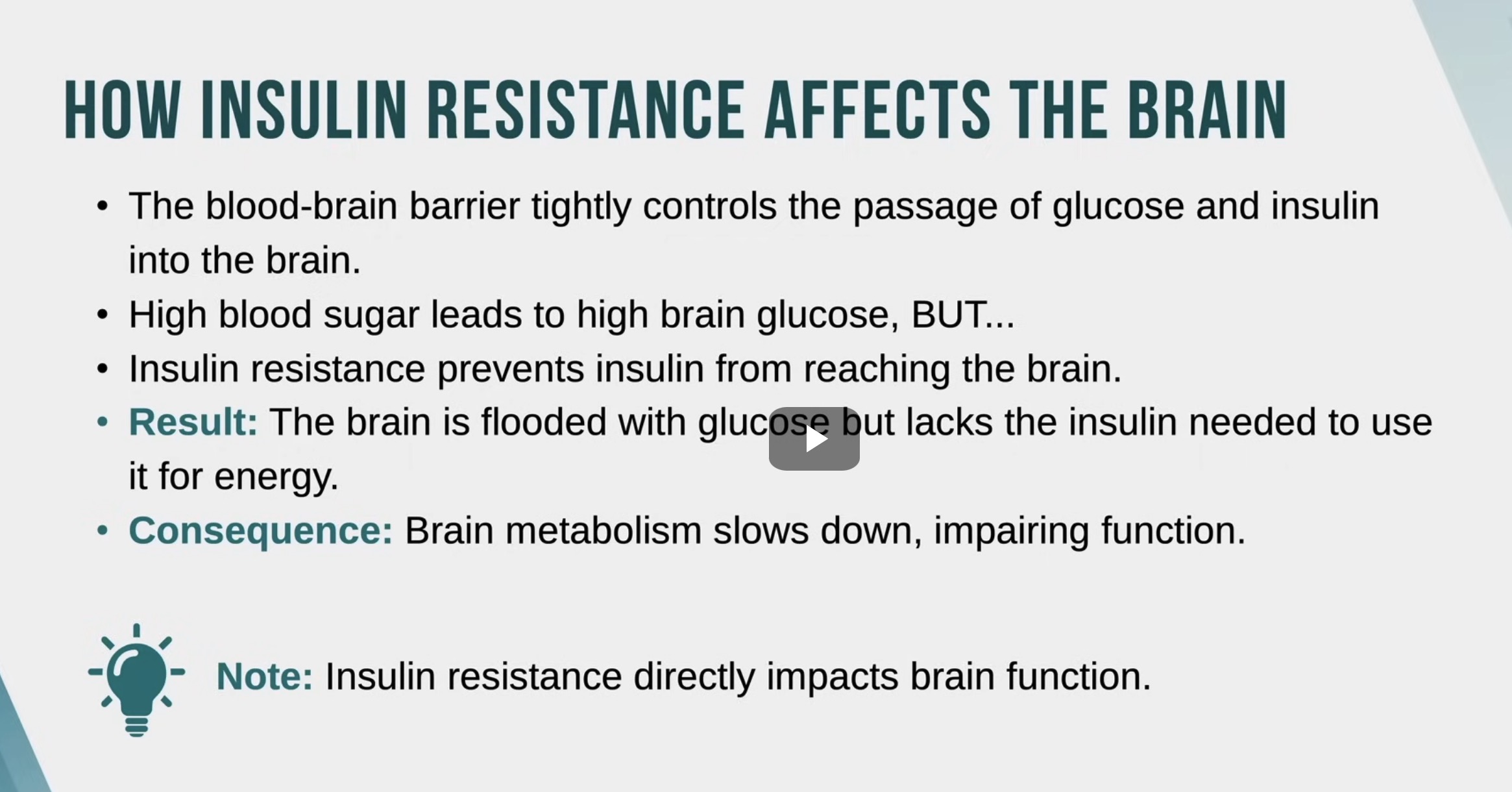
Brain glucose levels are about 40% lower then blood glucose levels, ratio is maintained even in type 2 diabetes. The blood brain barrier when insulin resistant will prevent insulin from entering the brain at the same ratio as in the blood. The theory being that even if the blood is flooded with glucose, without the proper insulin levels it cannot be processed by the neurons, and the neurons are energy starved.
8m11s: Could mental disorders be metabolic disorders?
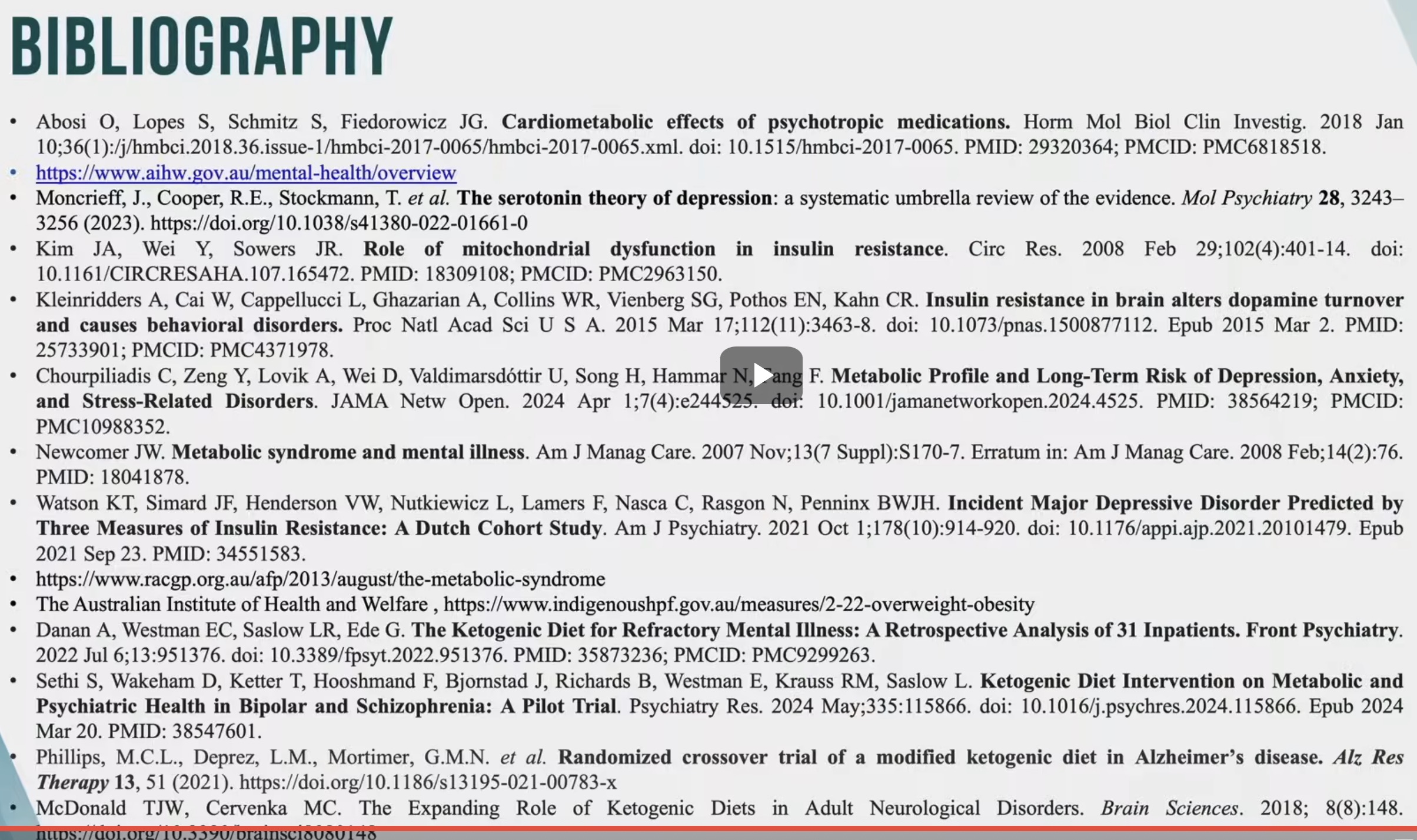
https://pubmed.ncbi.nlm.nih.gov/38564219/ Metabolic Profile and Long-Term Risk of Depression, Anxiety, and Stress-Related Disorders ; Markers of metabolic dissfunction seems to correlate with depression, anxiety, and stress-related disorders.
10m30s: Cardiometabolic effects of psychotropic medications https://pubmed.ncbi.nlm.nih.gov/29320364
12m30s: Brainhealthy diet; bioavailable nutrition, reduce foods that damage mitochondrial function and increases insulin resistance. focus on keeping blood sugar and insulin levels in healthy stable range.
.